
What Is Generative AI? A Quick Definition
Before diving into use cases, let's answer the top question in AI right now: whats generative ai?
Generative AI is artificial intelligence that creates new content — text, images, code, audio, or video — based on patterns learned from massive datasets. The technology behind it is the large language model (LLM) — systems like GPT, Claude, and Gemini that understand natural language and produce human-quality output.
Here's the definition of generative AI in one sentence: AI that generates something new from a prompt, rather than just analyzing or classifying existing data.
The distinction matters because traditional AI was analytical — it could spot patterns, make predictions, and flag anomalies, but couldn't create. Generative AI creates. And when you pair it with agentic AI — autonomous agents that execute multi-step workflows — you get generative AI automation: systems that don't just create content but deploy it, track it, and optimize it without human involvement.
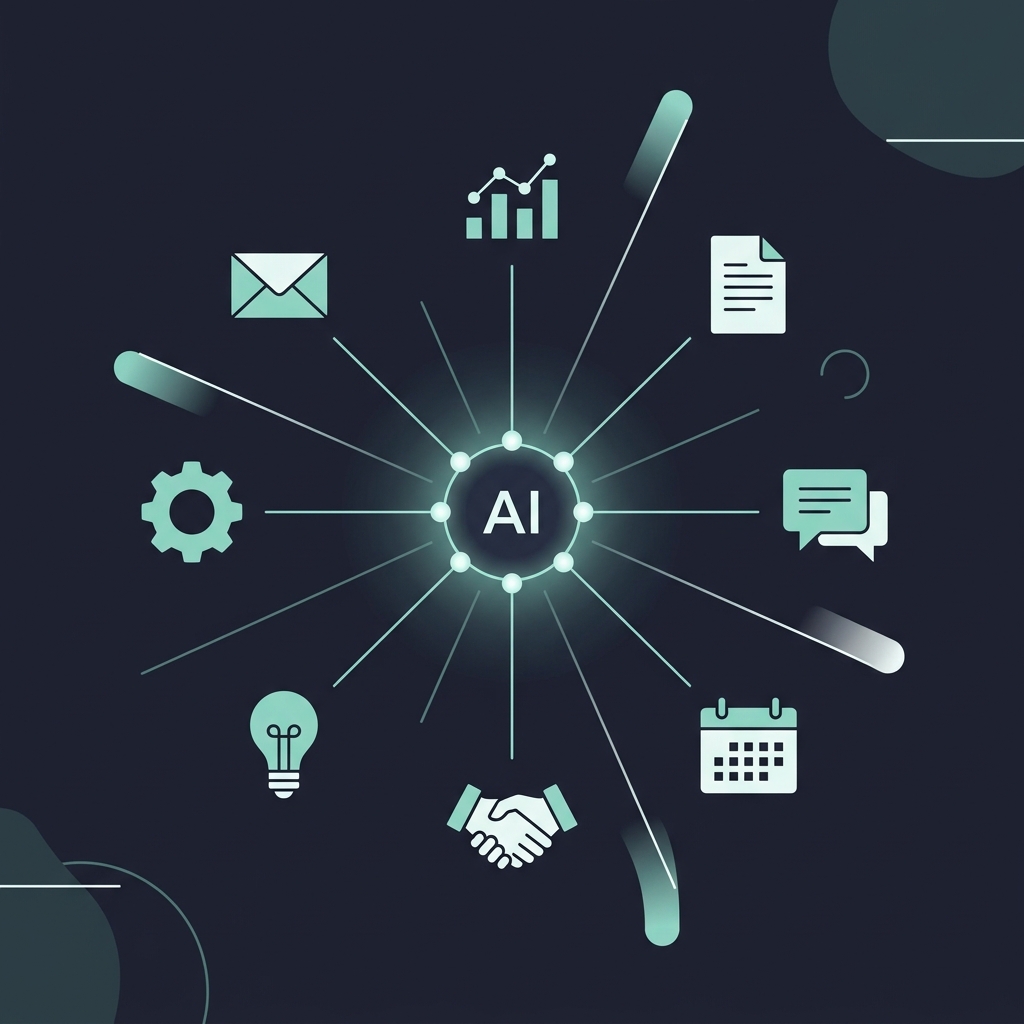
That's the shift happening now. Not "AI that helps you write emails faster," but AI that handles your entire communication workflow end-to-end. Here are seven use cases delivering the most impact for small businesses.
1. Automated Lead Generation and Qualification
The problem: You get a lead at 9 PM. You respond the next morning. By then, three competitors have already replied. According to Harvard Business Review, leads contacted within 5 minutes are 21× more likely to convert than those contacted after 30 minutes.
The generative AI solution: An AI agent monitors your website forms, email inbox, and social channels 24/7. When a new inquiry arrives, generative AI analyzes the message, qualifies the lead against your ideal customer criteria, drafts a personalized response, and sends it — all within 60 seconds.
But it doesn't stop there. A fully deployed generative AI automation system will:
- Score the lead based on business size, industry, and urgency signals
- Check your calendar and offer available booking slots
- Create a CRM record with qualification notes
- Send a follow-up sequence if the lead doesn't book within 48 hours
- Alert you only for high-priority, qualified leads
Expected ROI: Response time drops from 12–24 hours to under 2 minutes. In our BC deployments, this use case typically increases conversion rates by 30–50%.
2. Content Creation at Scale
The problem: You know you need to publish blog posts, social media content, and email newsletters regularly. But between running your business and serving clients, content creation falls to the bottom of the list.
The generative AI solution: Generative AI creates content matching your brand voice, targeting your specific audience, and following SEO best practices. This isn't about generating generic AI slop — it's about building a content system that produces quality output consistently.
Here's what a generative AI content workflow looks like:
- Blog posts — AI drafts articles based on your topic briefs and keyword targets, with your brand voice and industry expertise woven in
- Social media — Repurposes blog content into LinkedIn posts, Instagram captions, and Twitter threads with platform-specific formatting
- Email campaigns — Generates personalized email sequences for different customer segments, A/B tests subject lines, and optimizes send times
- Proposals and quotes — Drafts customized proposals based on discovery call notes and client requirements
Expected ROI: Content creation drops from 8–10 hours per week to 2–3 hours of review and approval — 5–7 hours reclaimed weekly for revenue-generating work.
By 2026, over 80% of enterprises will have used generative AI APIs and models and/or deployed GenAI-enabled applications in production environments, up from less than 5% in 2023.
— Gartner, Generative AI Planning Guide, 20243. Personalized Customer Communication
The problem: Your clients expect personalized communication, but you're sending the same template emails to everyone. The personal touch that won you the client gets lost as your roster grows.
The generative AI solution: AI generates truly personalized communication by understanding each client's history, preferences, and context. Every touchpoint feels human because generative AI has enough information to make it relevant.
- Appointment reminders that reference the client's specific service and last interaction
- Follow-up emails that summarize what was discussed and outline next steps
- Review requests sent at the optimal moment based on service completion timing
- Re-engagement campaigns for dormant clients with personalized offers based on their purchase history
- Birthday and milestone messages that reference the client relationship naturally
Expected ROI: Businesses implementing personalized AI communication see 15–25% higher client retention rates. For a service business with 100 active clients, a 20% retention improvement translates directly to revenue gains that far exceed setup costs — making this one of the highest-return generative AI use cases available.
4. Intelligent Document Processing
The problem: Your team spends hours reading contracts, extracting invoice data, processing intake forms, and summarizing meeting notes. It's tedious, error-prone, and expensive.
The generative AI solution: Generative AI reads, understands, and extracts structured information from unstructured documents — contracts, PDFs, emails, handwritten notes — with accuracy matching or exceeding human performance.
| Document Type | What AI Extracts | Time Saved |
|---|---|---|
| Contracts | Key terms, dates, obligations, renewal clauses | 30–60 min/contract |
| Invoices | Line items, totals, vendor info, payment terms | 5–10 min/invoice |
| Intake forms | Client details, requirements, preferences | 10–15 min/form |
| Meeting notes | Action items, decisions, follow-ups, deadlines | 15–20 min/meeting |
| Resumes/applications | Qualifications, experience, scoring against criteria | 10–15 min/resume |
In a real estate office processing 50 contracts monthly, this generative AI use case saves 25–50 hours of manual work. In a law firm, contract review automation is often the highest-ROI deployment available.
5. AI-Powered Customer Service
The problem: You can't afford 24/7 customer support staff, but your clients expect instant answers. Missed calls and delayed responses cost you business.
The generative AI solution: This isn't the frustrating chatbot that says "I didn't understand that" — modern generative AI delivers AI customer service that actually works. It understands context, accesses your knowledge base, and provides accurate, helpful responses in natural conversation.
A well-deployed AI customer service agent can:
- Answer product and service questions using your actual documentation
- Handle scheduling, rescheduling, and cancellation requests
- Process common requests (address changes, password resets, account updates)
- Escalate complex issues to the right team member with a full context summary
- Follow up after resolution to ensure satisfaction
The key difference from old-school chatbots: generative AI generates contextual responses rather than selecting from scripted options. It understands "I need to move my Thursday appointment to next week, but not Monday" and handles it correctly.
Expected ROI: The benefits of AI in customer service are measurable — 60–80% of routine inquiries resolved without human intervention, freeing your team for complex, high-value client interactions.
6. Automated Reporting and Analytics
The problem: Data-driven decisions are better decisions, but who has time to pull reports from four platforms, compile them, and identify the insights that actually matter?
The generative AI solution: AI connects to your data sources — CRM, accounting software, project management, Google Analytics, social media — and generates executive-ready reports on a schedule. No more Friday afternoons building spreadsheets.
Here's what automated reporting looks like in practice:
- Weekly business dashboard — Revenue, pipeline, conversion rates, and key metrics delivered to your inbox every Monday morning
- Monthly financial summary — P&L highlights, expense trends, and cash flow projections with plain-English analysis
- Campaign performance — Which marketing channels are delivering qualified leads, and which are burning budget
- Client health scores — Early warning system for at-risk accounts based on engagement patterns, payment history, and communication frequency
The AI doesn't just format data — it interprets it. Instead of a chart showing "email open rates dropped 12%," it says: "Email open rates dropped 12% this month, likely due to the subject line change in Week 3. Recommend reverting to question-based subject lines, which averaged 34% opens vs. the current 22%."
Expected ROI: 3–5 hours saved weekly on reporting, plus better decision-making from insights you weren't extracting manually.
7. AI-Generated Sales Proposals and Quotes
The problem: Creating customized proposals takes 2–4 hours each. You're either spending too long on proposals that don't close, or sending generic ones that don't win.
The generative AI solution: After a discovery call, your AI agent generates a customized proposal including the client's specific pain points, your recommended solution mapped to their needs, pricing, timeline, and expected outcomes. What took 3 hours now takes 15 minutes of review.
The process works like this:
- Discovery call recording — AI transcribes and summarizes the call, extracting key requirements, budget signals, and decision criteria
- Proposal drafting — Generative AI creates a customized proposal using your templates, case studies, and pricing structure
- Internal review — You review and adjust in 10–15 minutes instead of writing from scratch
- Delivery and tracking — AI sends the proposal, tracks opens, and triggers follow-up based on engagement
Expected ROI: Proposal generation time drops by 75%. Close rates increase because proposals arrive faster (often same-day vs. 3–5 days) and are specifically tailored to each prospect's stated needs.
How to Get Started with Generative AI for Your Business
You don't need to implement all seven use cases at once. We recommend the opposite — start with one high-impact use case that solves your biggest operational pain point, prove the ROI, and expand from there.
Here's our recommended starting order based on impact and ease of deployment:
| Priority | Use Case | Setup Time | Time Saved/Week | Complexity |
|---|---|---|---|---|
| 🥇 Start here | Lead generation & qualification | 1–2 weeks | 5–10 hours | Low |
| 🥈 Add next | Customer communication | 1 week | 3–5 hours | Low |
| 🥉 Then | Document processing | 1–2 weeks | 5–8 hours | Medium |
| 4th | Content creation | 1 week | 5–7 hours | Low |
| 5th | Customer service | 2–3 weeks | 10–20 hours | Medium–High |
| 6th | Reporting & analytics | 1 week | 3–5 hours | Medium |
| 7th | Sales proposals | 1–2 weeks | 3–5 hours | Medium |
The businesses seeing the best results organize these use cases around core operational pillars — acquisition, administration, production, and retention. When use cases share context across pillars, lead generation feeds customer communication, which informs reporting, which shapes content strategy.
That's the difference between "using AI tools" and deploying artificial intelligence automation that operates as an integrated system. The compound effect is where the real value lives.
Frequently Asked Questions
Generative AI is artificial intelligence that creates new content — text, images, code, audio, or video — based on patterns learned from massive datasets. Large language models like GPT, Claude, and Gemini power most generative AI applications. For small businesses, generative AI automates content creation, customer communication, data analysis, and operational reporting.
The highest-impact generative AI use cases for small business include: (1) automated lead response and qualification, (2) personalized customer communication, (3) content creation at scale, (4) document processing and data extraction, (5) AI-powered customer service, (6) automated reporting and analytics, and (7) sales proposal generation. Each delivers measurable ROI within weeks of deployment.
The highest-impact starting point for most small businesses is automated lead generation and qualification. It delivers measurable time savings within the first week — typically 5–10 hours — and directly impacts revenue. Start with one use case, prove the ROI, then expand to customer communication and document processing.
Yes, when deployed correctly. Enterprise-grade generative AI platforms offer data encryption, access controls, and processing agreements that prevent your data from being used to train models. At Avelle Solutions, we deploy generative AI with strict data isolation — your business data stays within your systems and is never shared or used for model training.
Traditional AI analyzes existing data and makes predictions or classifications — like spam filters or recommendation engines. Generative AI creates entirely new content that didn't exist before — writing emails, generating images, summarizing documents, or drafting proposals. The key distinction: traditional AI interprets, generative AI creates.
Understand the Technology Behind These Use Cases
Want to know how generative AI and agentic AI work under the hood? Our plain-English guide breaks down the architecture, the difference between AI tools and autonomous agents, and why it matters for your business.
Read: Agentic AI Explained →